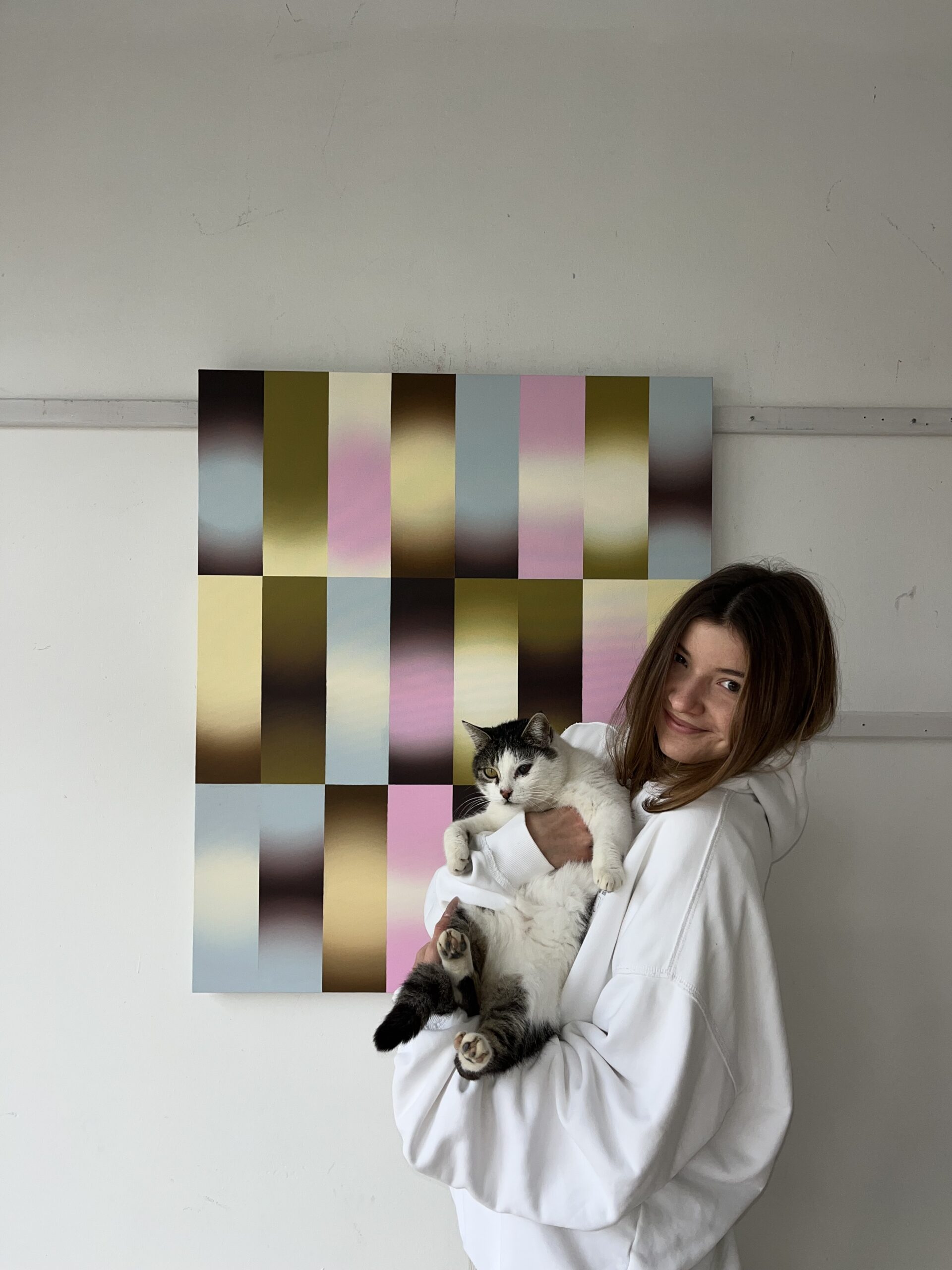
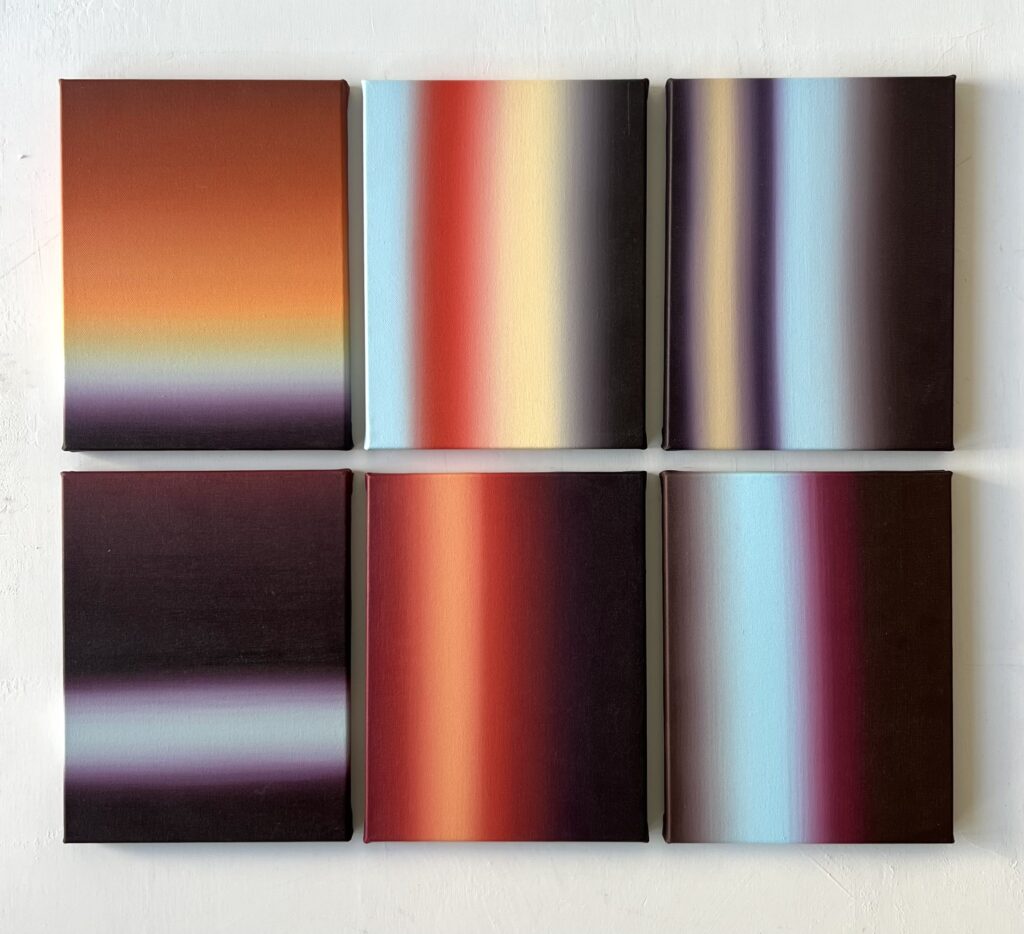
Today, we present Mary, an inspirational artist working under the pseudonym Marylocki. She is originally from Ukraine, where she studied at the Grekov Art College in Odessa. There she developed her relationship with colour, both technically and emotionally. Colour theory has become an important part of her artistic thinking and creative expression.
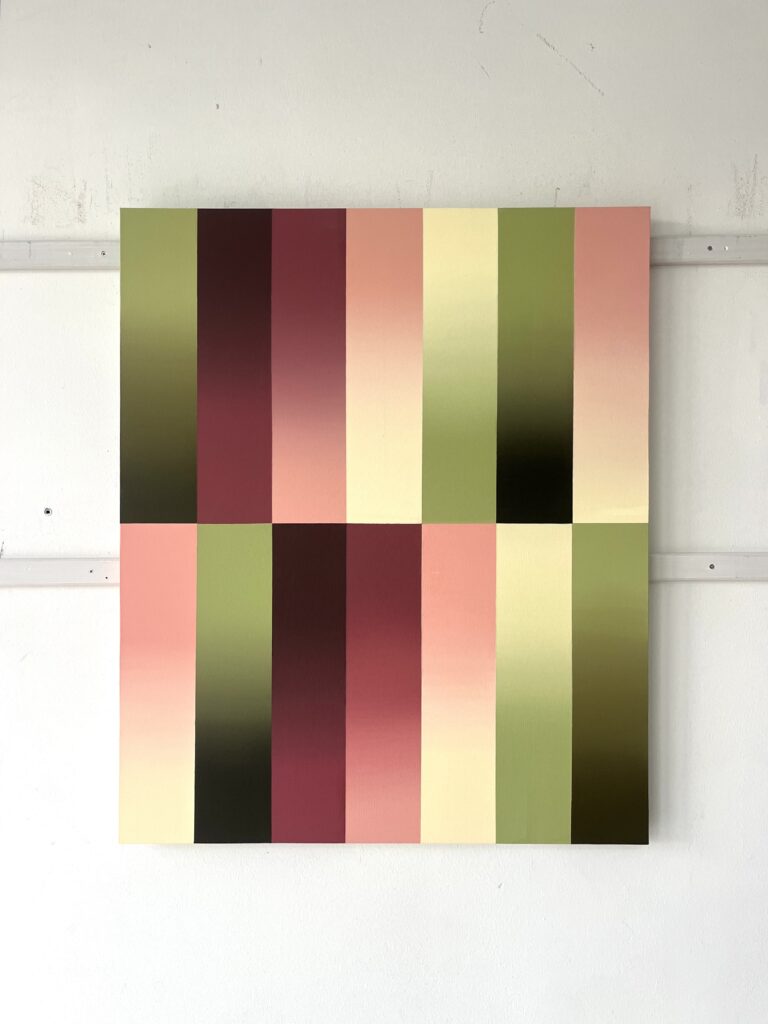
Making art has been a daily part of her life for as long as she can remember; she says she cannot imagine living without it. She describes it as an essential daily ritual. The goal and purpose of her works are for people to experience visual peace and to pause in the moment.
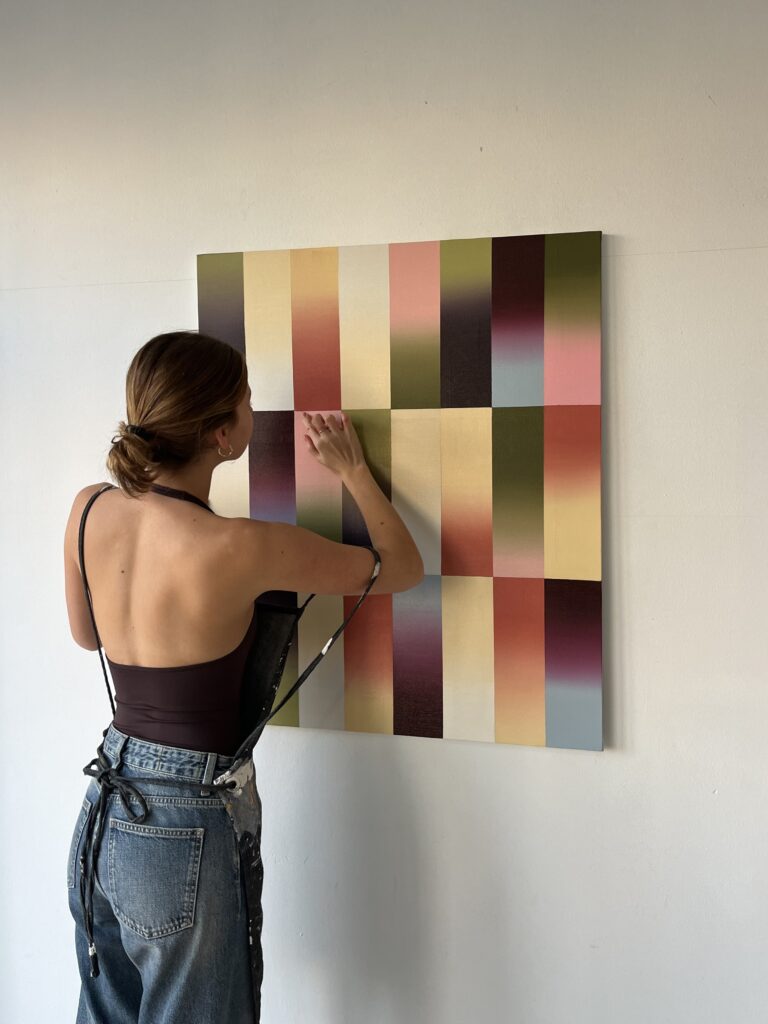
Much of Mary’s inspiration comes from within. When Mary creates, she enters a focused, almost meditative state where external distractions fade away, building on her desire for each piece to evoke visual peace and presence.
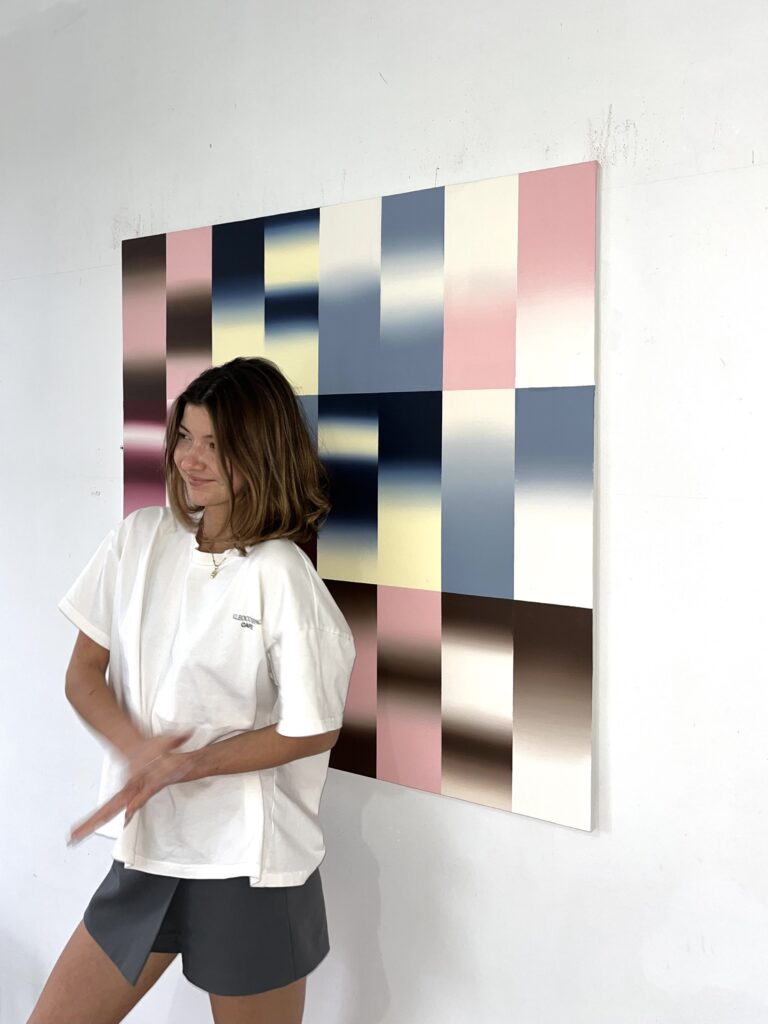
Her process is intuitive rather than logical; she lets colour guide her choices, starting with combinations that feel right to her. As a result, each piece naturally evolves, closely reflecting her internal inspiration.
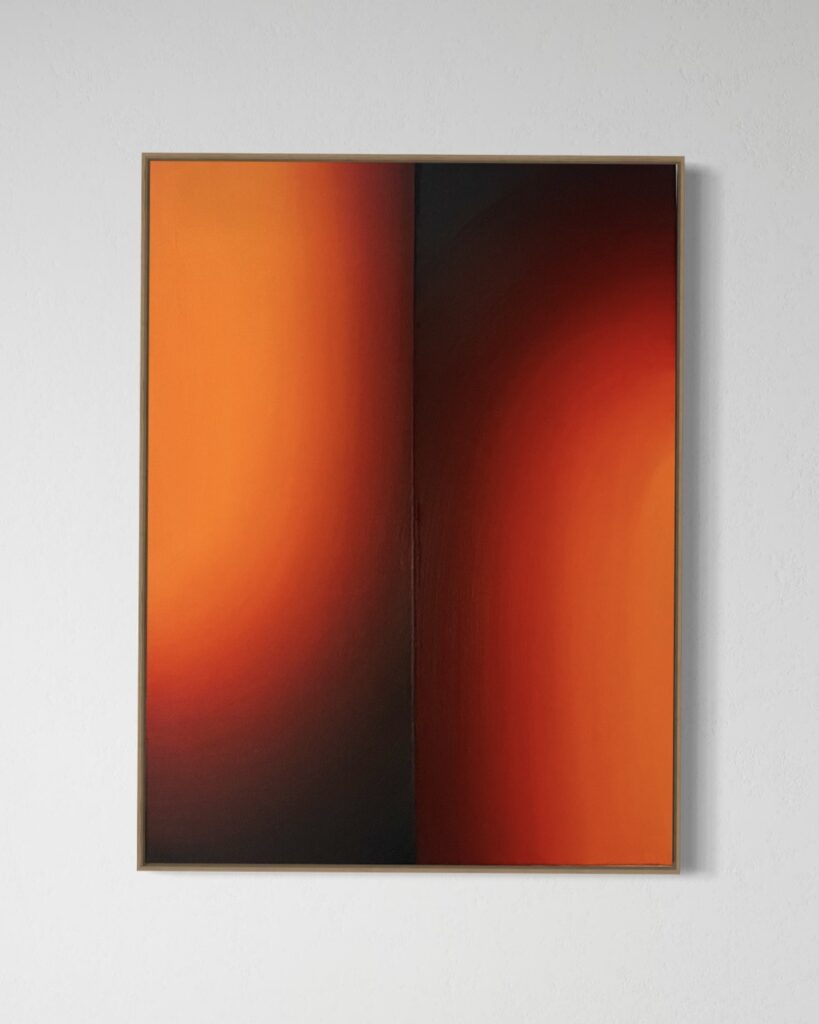
As someone with a well-developed visual expression, we asked Mary a couple of questions about her work process and direction.
You’ve mentioned that making art has been part of your life as long as you can remember. Looking back, what has remained constant in your practice, and what has naturally shifted over time?
Looking back, I realize that my attitude towards colour has remained unchanged. From the very beginning, colour has been my primary language and means of expressing my feelings. I instinctively learn to trust colour and understand its power.
You describe yourself as an intuitive painter. Do you feel that your emotional state influences the work while you paint?
Yes, definitely. I can always tell how I felt just by looking at the colours later. Without any plans, I just start, and my state of mind is reflected in the gradients and transitions. Even when the composition remains fairly strict, the gradients give everything away.
As someone who is very connected to the process of their work, how hard is it for you when you have to part with it, and your work becomes part of someone else’s?
For me, it’s a surprisingly gentle process. Since my work is largely process-oriented, once a piece is finished, it feels complete and self-sufficient. The artwork continues its life through space and through the person who comes into contact with it.
You said that you paint every day, which is very impressive. Do you have a set schedule, or do you let the piece set its own pace?
I paint every day, but I don’t impose a strict schedule on myself. It’s important for me to be emotionally and physically satisfied before I start creating. Some works are made slowly, redrawn several times, and I can’t find the right shade for a long time, while others are almost ready after the first layer.
Are you currently working on something, or is there something you would like to explore next in your work?
Currently, I continue to explore colour as a central theme. How can I create depth, movement, luminosity, and mood without relying on figurative elements. I’m interested in pushing abstraction further by experimenting with scale and repetition.
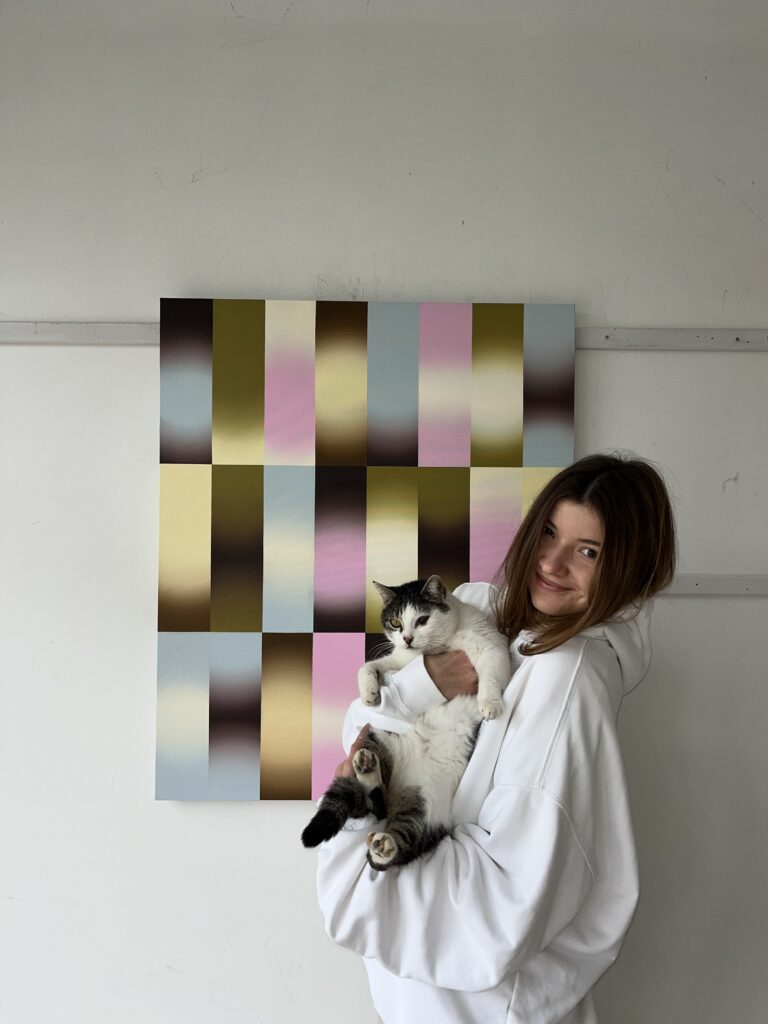
What instantly drew us to Mary’s practice is how effortlessly she applies colour to the canvas, while simultaneously maintaining clear structure and composition.
Mary particularly stands out in the way she uses colour; her works are remarkably balanced, each colour stands out in its own way without disrupting the overall harmony, creating a radiant finished piece.
The reason for her strong cohesion with colour becomes clear after Mary revealed to us that during her entrance exams, she received full marks in colour theory.
We can see that knowledge is reflected in her current work, but her art is not only academically grounded; it is also guided by intuition and an inner sense.
Mary’s work serves as a reminder of the importance of understanding one’s own strengths and consistently developing what we are naturally good at.
More of Mary’s work can be found online:
https://marylockistudio.etsy.com
In the gallery below, we have included several of her works.