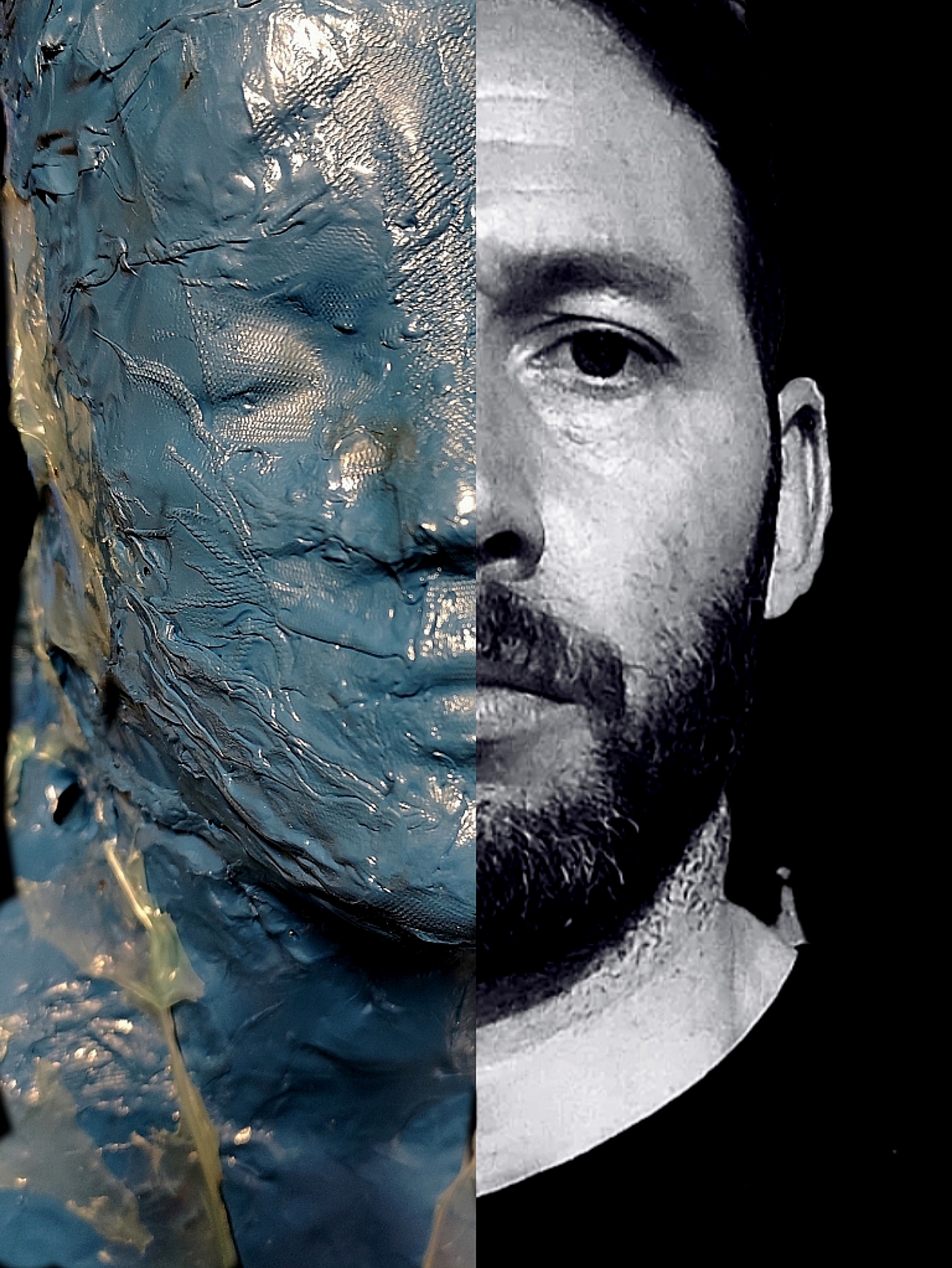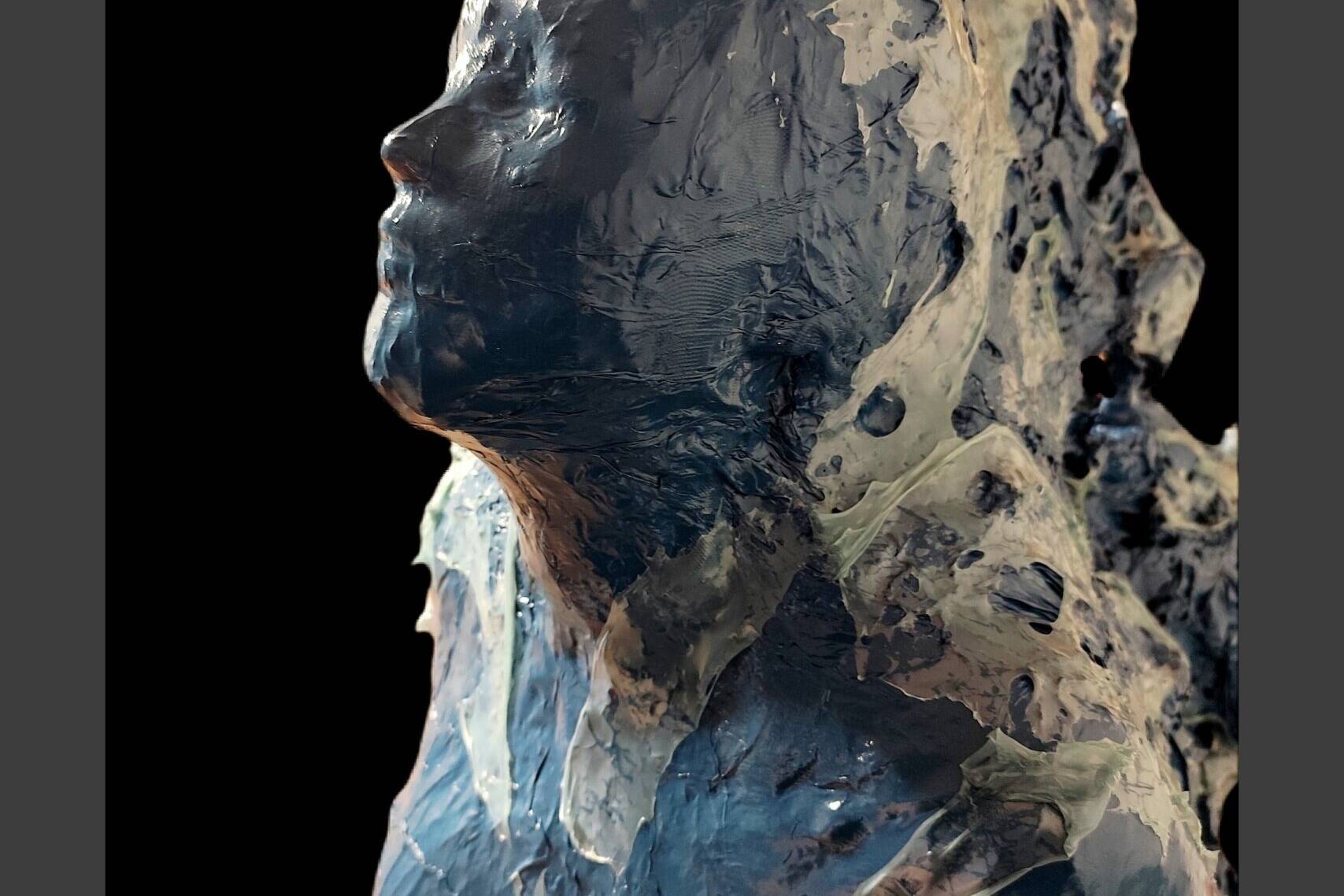

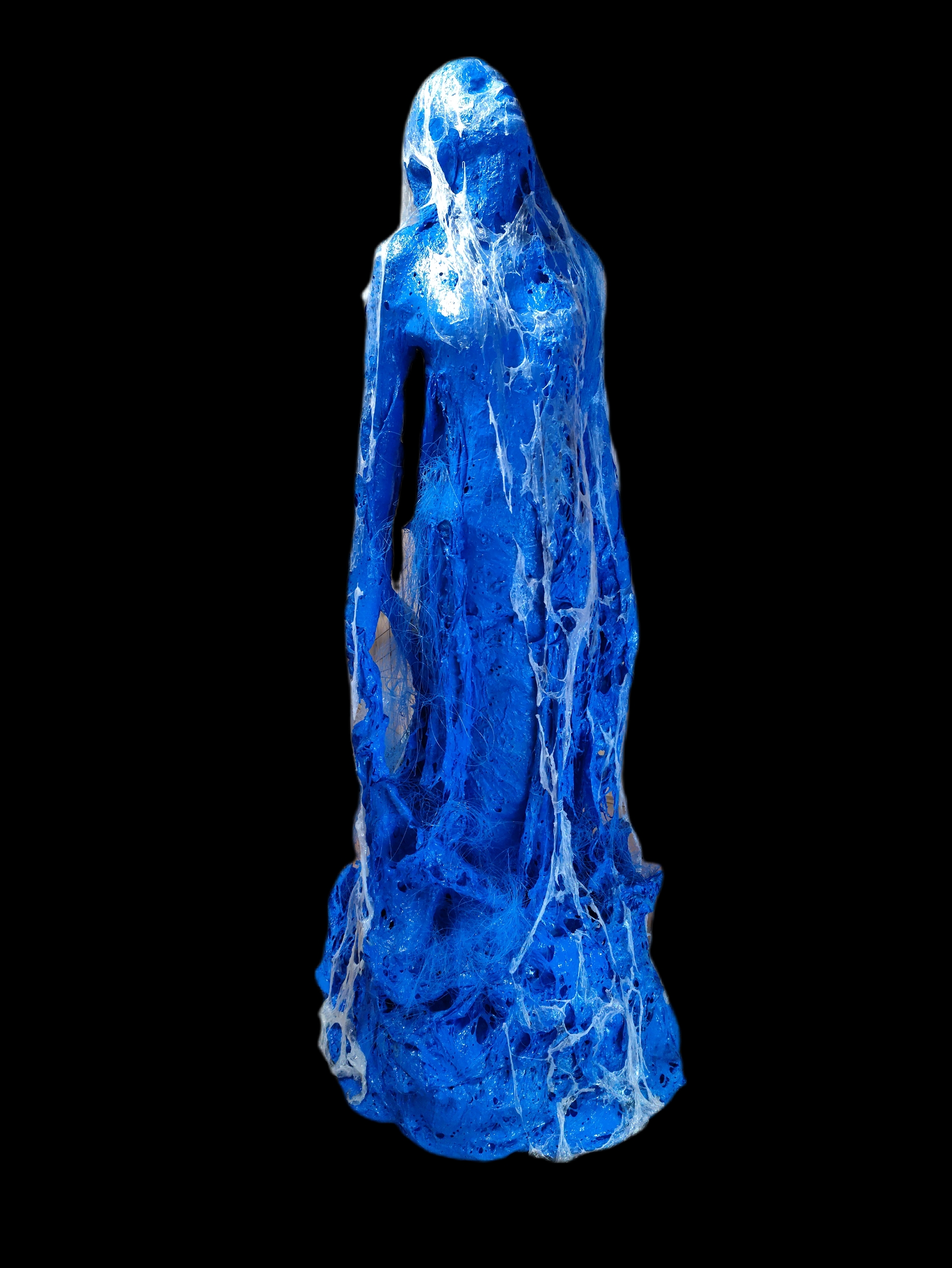
Devid Biscontini is an Italian contemporary artist whose sculptural practice investigates transformation, body, matter and image through the manual thermal transformation of industrial plastic films. Working with heat and open flame, he develops forms in which folds, tensions, transparencies and stratifications emerge directly from the behaviour of the material during the process.
The feminine figure has been a recurring presence within his research, particularly as a point of reflection on origin and transformation. In his ongoing project MATRICE, this investigation develops further through the relationship between image and matter, control and unpredictability, and the way form emerges through the encounter between the artist’s intention and the material’s response.
These questions are explored in depth by art historian and curator Gelly Gryntaki, PhD, in the following essay, “Listening to Matter Speak: Ten Thoughts on Devid Biscontini’s MATRICE.”
Listening to Matter Speak:
Ten Thoughts on Devid Biscontini’s MATRICE
1. According to the French philosopher Michel Serres, both science and art are ways of investigating the truth of the world around us. If the first one is based mostly on observation, the second is based on insight. Serres used the example of William Turner and his artistic insight into thermodynamics, a branch of physics that could also be considered philosophy. Indeed, over the course of the 19th century, thermodynamics led to a whole new turn in world thinking. New ideas entered people’s minds and discourse, along with the railways. Heat death of the Universe, entropy, energy transformations. The immutable Newtonian universe, well-controlled like a watch, was shattered; a new worldview emerged: a changing world, always in motion. Nothing stable, nothing predictable.
2. Devid Biscontini’s entire artistic practice seems to translate into matter a deep philosophical quest. “Every image precedes visible reality and survives within matter as memory. Through transformation, the work seeks the moment in which an invisible presence becomes perceptible,” he says in his artistic statement, recalling, on the one hand, Plato’s metaphysics, welcoming, on the other, new ways of scientific thinking such as Ilya Prigogine’s dissipative structures or even Jane Bennett’s vibrant matter. And in practice, by using very modern materials and techniques, such as plastics and thermoforming, while meditating on the primordial struggle between material and essence that runs through philosophy, his art investigates ideas from the origins of metaphysics to the postmodern adoration of the flow.
3. Through all these exciting encounters, there is a deep core of poetry; after all, if the art critic Giuliano Serafini locates Biscontini’s practice “on the threshold between necessity and chance”, it is exactly where the French poet Mallarmé finds the quintessence of existence: “A Roll of the Dice Will Never Abolish Chance”, says the poet, and Gilles Deleuze – another flow aficionado -, in this indeterminacy, sees the realisation of Necessity. Nature within all these is seen as an infinite creative force. The actual poetess.
4. Biscontini’s figures reveal themselves within consecutive films of plastic; they emerge through matter, just as, in his artistic philosophy, the image, held within constructed conceptual schemes and language, finds its way into reality and becomes perceptible. And the essential figure that emerges is the female, symbol of beginning and transformation. His research around the archetypal qualities of the feminine started in 2024 with his Immagine Femminile series. Over the following two years, this focus served his research into media and techniques, leading him to an artistic practice capable of expressing transformation and ongoing change. He experimented extensively with materials and colours, adopting an approach to matter as a living organism, and he created artist books in which materials become ideas.
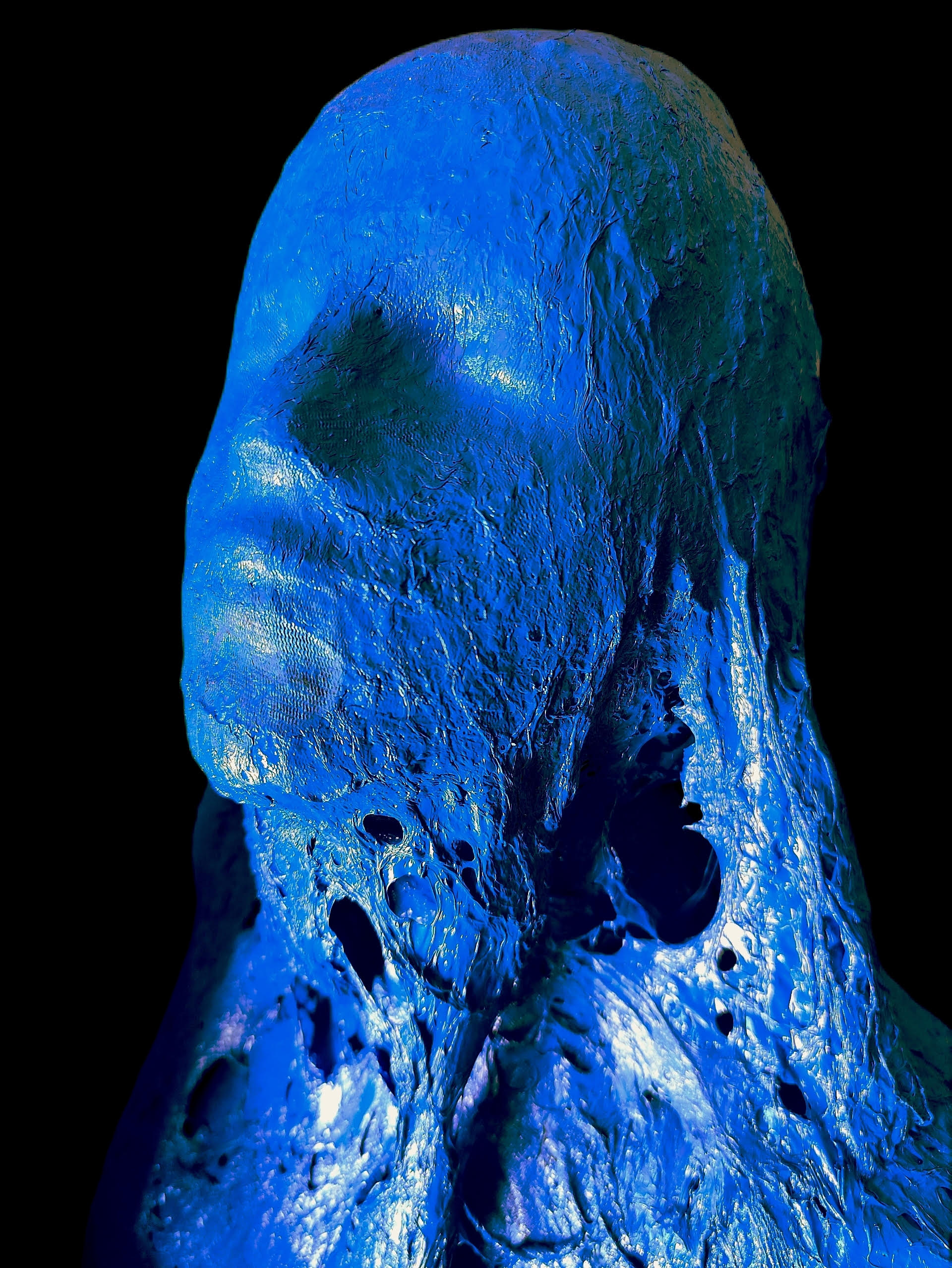
5. MATRICE brings together all his philosophical and material investigations. The indeterminacy of the material, melting during the thermoforming, becomes the language of the matter, its idiom, so well hidden under the projections of reality. The female image which emerges summons the primaeval essence, the matrix of the world, the Great Mother, an archetype that, according to Jung, is associated with “the magic authority of the female; the wisdom and spiritual exaltation that transcend reason; any helpful instinct or impulse; all that is benign, all that cherishes and sustains, that fosters growth and fertility.” Matter, in this reading, resonates with the ambivalences of the mother archetype without however being reduced totally to it. And Matter/Mater/μήτρα may also connote “anything secret, hidden, dark; the abyss, the world of the dead, anything that devours, seduces, and poisons, that is terrifying and inescapable like fate.” Necessity.
6. In Biscontini’s practice, these complicated relationships and ideas are translated into materiality through an idiosyncratic manipulation of his medium. The actual sculptures are born through a succession of tensions: the shaping of bodies that seem so compact and stable despite the ease with which the material gives in to thermal energy; the definitiveness of the form against the unexpected colour flashes revealed during the procedure – what Serafini had already observed when he wrote that “the plastic, cauterised, opens holes and fissures, uncovering the colour beneath”; the roughness of a texture, on the surface of a material anticipated to be smooth, that records not the slow accumulation of time proper to wood or metal, but the single instant in which the transformation occurred. And over some of these bodies the filament occasionally becomes wound, veil and net at once: the layer of the real deposited over the figure, obscuring it without ever erasing it.
7. The choice of the female element, consequently, is pivotal in the artist’s philosophy: the artistic matter gives birth while being radically transformed, irreversibly altered – though not annihilated – by entropic thermal energy, which leaves on the surface the traces and the memory of that passage, enacting, thus, the archetype’s double nature.
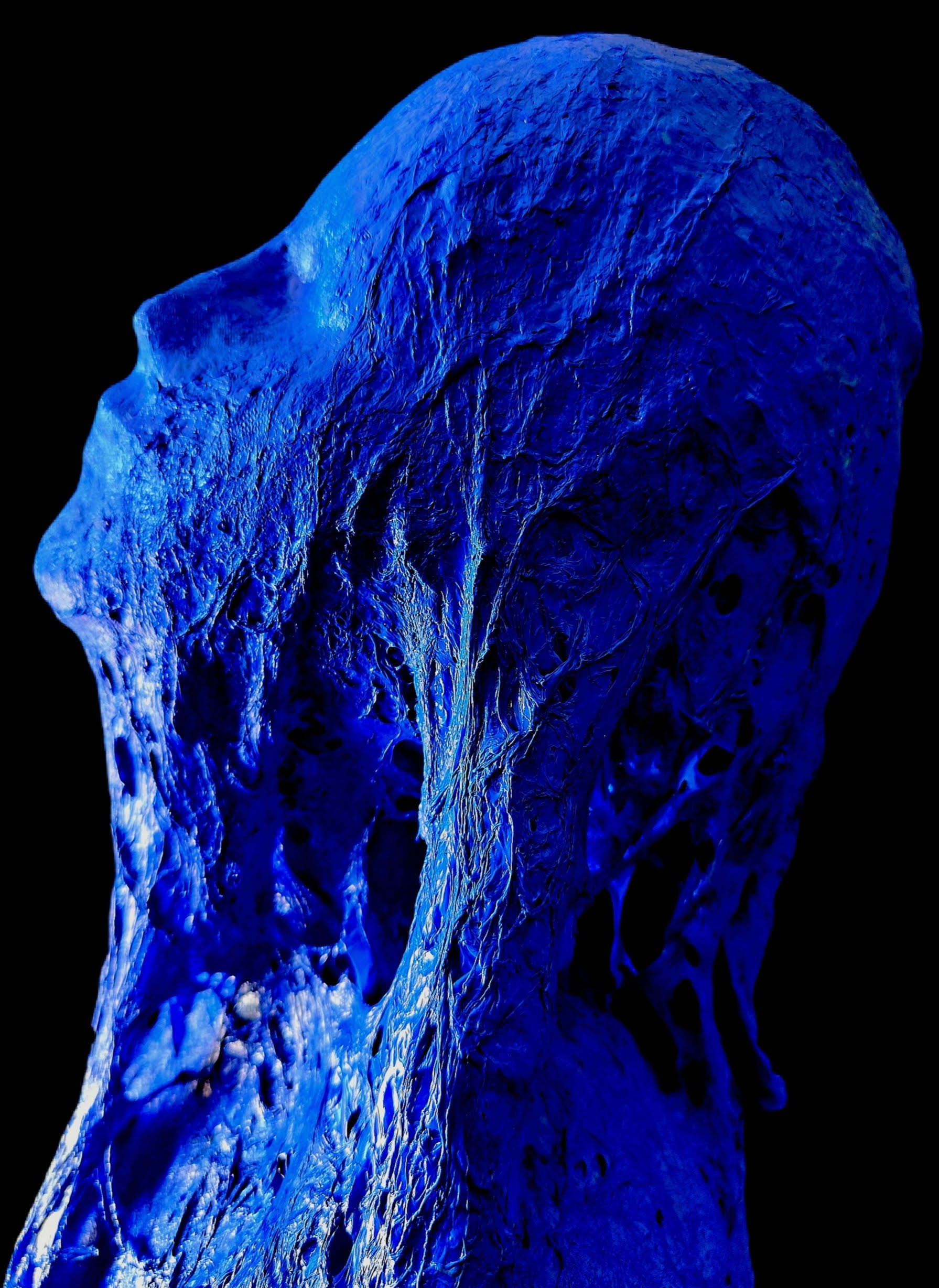
8. By making this procedure his main practice, the artist follows a path opened by a genealogy of creators like John Cage and George Brecht – and even Gerhard Richter in his later works -, who turned to chance procedures in order to let nature talk, or Alberto Burri and Jean Dubuffet, who adopted freedom and spontaneity in their practice, and approached abstraction as a means to tune in with the language of the material. Biscontini may not abdicate control, but he is negotiating it, welcoming the unpredictable while still guiding, through temperature, timing, and manual work, the moment transformation is arrested. Through this route, his art is almost conceptual, although in this case philosophy and process do not precede the artistic object, but rather take shape within it. “Open flame and heat let me negotiate with the material rather than impose a fixed form on it (…) the plastic resists, folds, and, in a sense, decides alongside me”, he declares. By creating alongside the material, Biscontini abolishes dualisms and expresses his respect for the matter.
9. In MATRICE, matter and the human figure seem to produce one another; they coexist on equal terms. At the same time, by attributing agency to the material, the artist disclaims his human privilege over matter and, in doing so, declares his openness to a less hierarchical relationship between human control and material behaviour. However, why choose such a controversial and ecologically demonised substance as plastic?
10. “More than a substance, plastic is the very idea of its infinite transformation”, says Roland Barthes in his Mythologies. Barthes notes that plastic is closely related to imitation. “[T]he age-old function of nature is modified: it is no longer the Idea, the pure Substance to be regained or imitated: an artificial Matter, more bountiful than all the natural deposits, is about to replace her, and to determine the very invention of forms”. So, where else but within this very material of imitation should someone search for the primal Idea? To ask plastic – the emblem of our ecological guilt, the matter we produce only to disown – to give birth once more, is not an absolution, but the recognition that even a rejected and contradictory material may generate what did not previously exist, thus, to turn Barthes’s verdict against itself: if this artificial substance has truly replaced nature, then it is here, and nowhere else, that her image must be summoned back. I consider it an act of hope.
Gelly Gryntaki, PhD
London, 2026