
Following our first feature on the work of German photographer Andreas Perlick, known for his black-and-white pinhole photography, we return to his practice with a new photographic project.
In our previous feature, we explored a body of work that reflected one of Andreas’s strongest interests: architecture and the details found within it. This time, he takes us in a slightly different direction. While his eye for architectural details, structures and light remains central to his photography, the atmosphere shifts towards a more relaxed and urban perspective.
Through his photographs, Andreas presents the city as he experiences it, revealing his personal way of observing his surroundings. His photographs bring together different scenes that capture the atmosphere of urban spaces – from streets and everyday places to architectural elements, old structures and buildings, as well as unusual urban scenes. It is a portrait of the urban environment without people, where even the most familiar places take on a different character through his lens.
Silence and the City
My cities are empty. No people, no traffic. For me, they are more like a stage of shapes, edges and corners, sometimes embraced by light.
I love the stillness of the early morning, when the city seems to stretch in the first light of day. A few people hurry past, absorbed in their own destinations. I have time. I look around.
Even later in the day, cities have their quiet places. Turn a corner, then another, perhaps a third, and the city changes. Courtyards open up behind façades, little worlds of their own. Every door might lead somewhere. There might be a little secret waiting for me.
I love being surrounded by architectural details, discovering how shapes, lines and light come together. Sometimes a place seems to hold the promise of an image. I follow that feeling, not knowing whether it will lead me anywhere.
My cities are real, and yet they lie a little. They are places I have walked through, but the photographs show something that may never have existed quite like this. Perhaps they reveal as much about me as they do about the places themselves.
I am drawn to moments that ask for nothing but a little time. Nothing spectacular, perhaps, but things that reveal their quality when given a little attention. A constellation of forms, a certain light, an atmosphere that slowly unfolds. Something worth staying with.
Fleeting moments of happiness. Such moments are what I am after.
Come along and see for yourself.
– Andreas Perlick
The following photographs are accompanied by Andreas Perlick’s own captions.
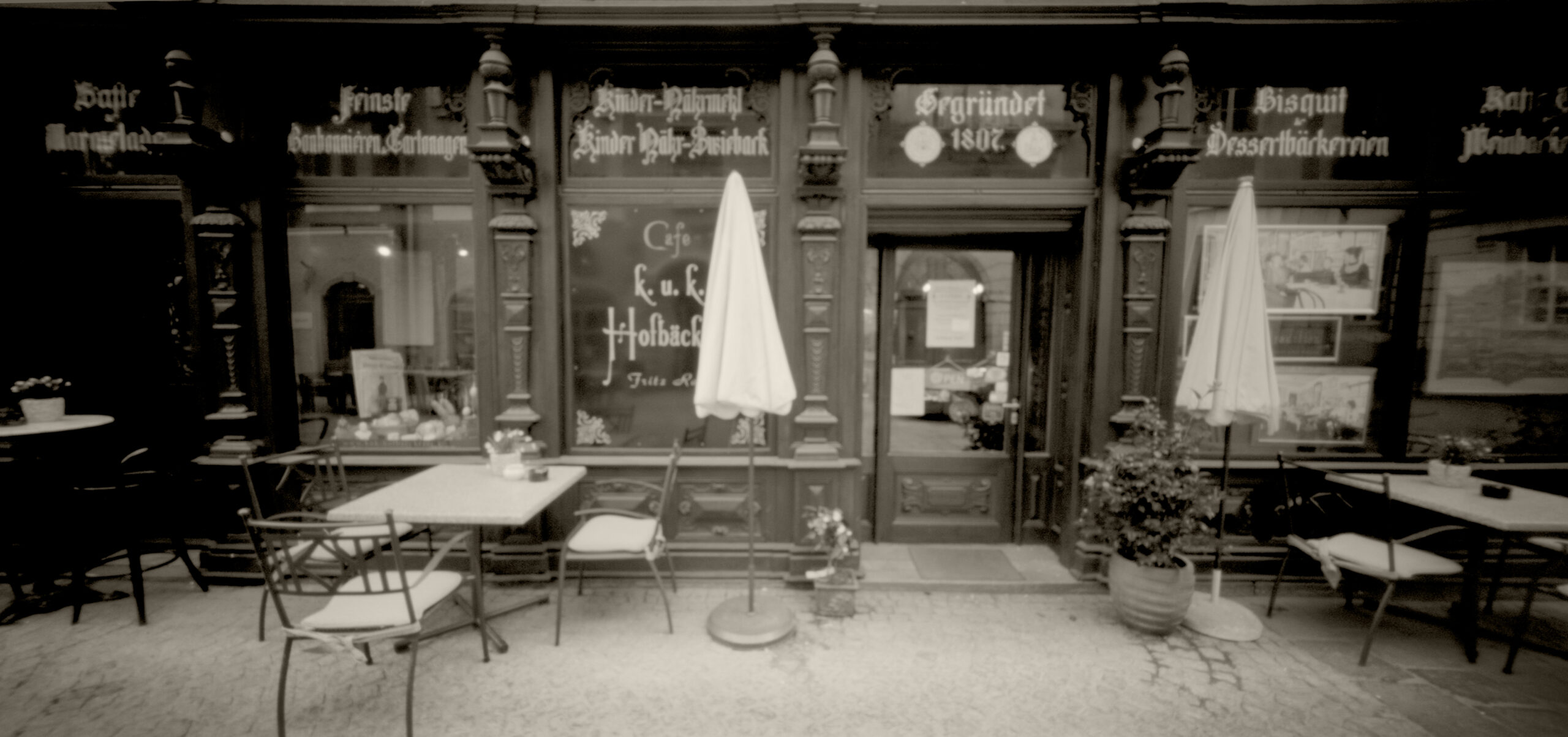
K.u.K. Court Bakery Fritz Rath, Linz, Austria
Linz is an important cultural and economic centre in Austria. As is often the case in Austria, there are still many reminders of the Austro-Hungarian Habsburg monarchy. The K.u.K. Court Bakery Fritz Rath is the oldest bakery in Linz. Although the shop still sells baked goods to this day, one nevertheless has the feeling of leaving the present behind and stepping into the “good old days”.
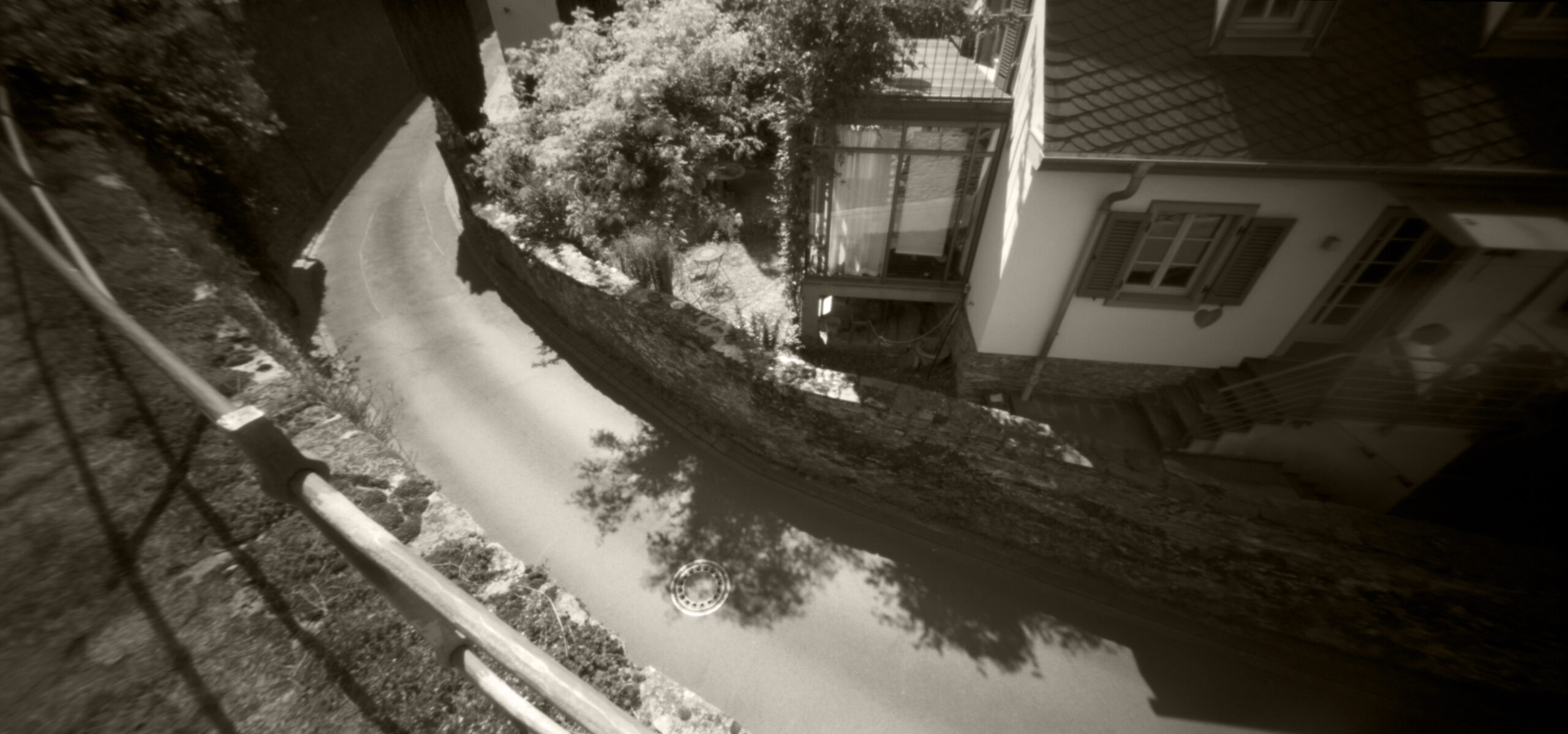
Oberwesel, Germany
We were exploring Oberwesel with friends. Being a pinhole photographer can make me a somewhat inconvenient companion in situations like this. Whenever I discover a subject, I temporarily drop out of the group. After all, exposing a photograph with my camera takes quite some time. Fortunately, my friends are photographers too, so they were more than willing to accommodate me. The view from above, looking over the railing onto the little street and the house below, combined with perfect lighting conditions, immediately captivated me. The photograph reminds me of the work of the fotoform group and of Otto Steinert’s Subjective Photography.
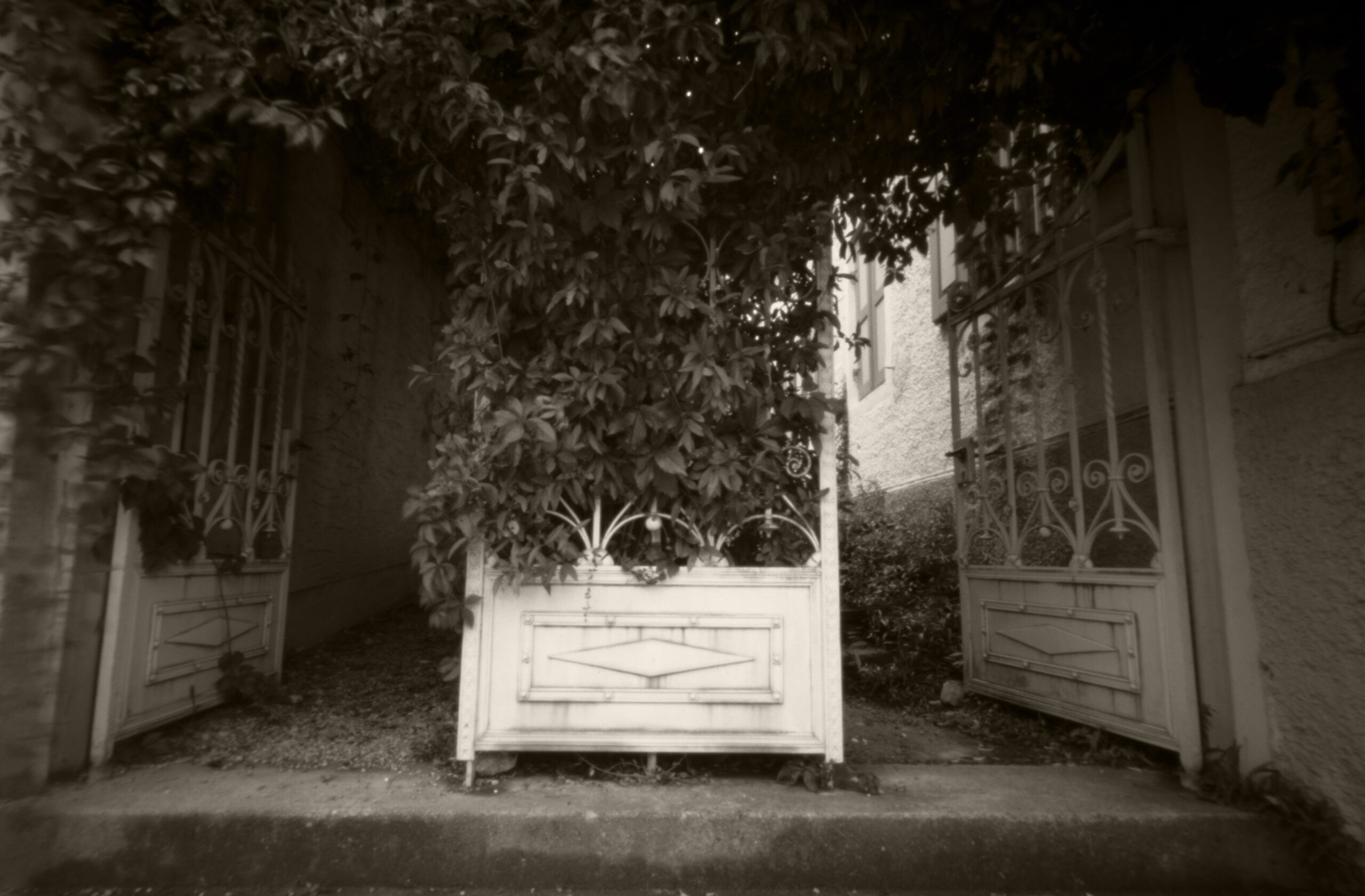
Dießen am Ammersee, Germany
While strolling through Dießen, as one does, I noticed this entrance to a house. Entrances often catch my attention because they tend to be designed in unusual ways. I find the two parallel entrances here rather quirky. They probably serve the two halves of the house, one on either side. But what actually prompted me to take the photograph was the white planter. I simply cannot resist white objects set against a dark background. I suppose this is where my fondness for graphic forms comes into play.
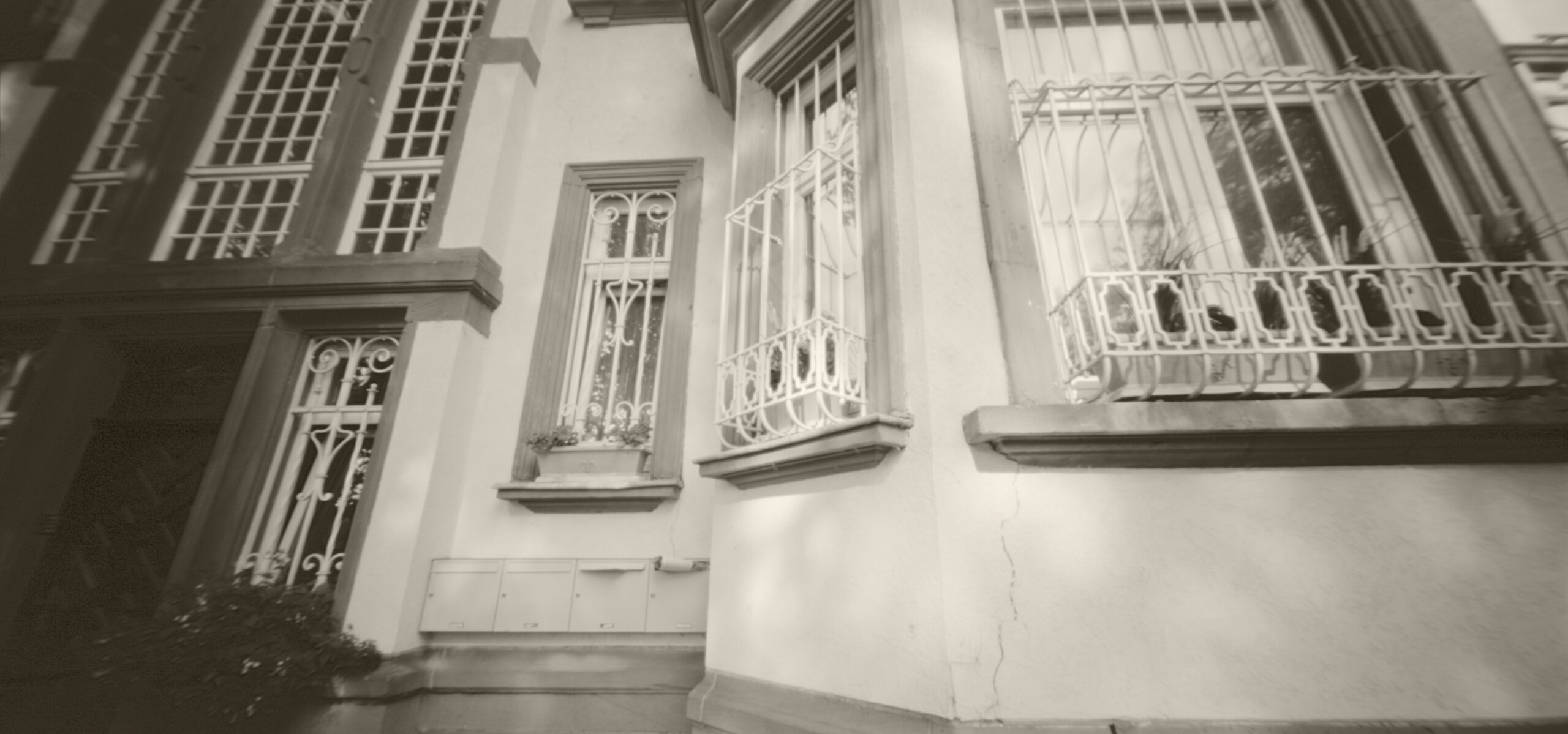
Fischmarkt 5, Speyer, Germany
After visiting the famous cathedral in Speyer, we took some time to enjoy the city itself, which we had not explored before. Fischmarkt was a quiet, somewhat secluded spot. Number 5 immediately caught my eye because of the beautiful patterns created by the white window bars and grilles. The building houses a number of notary offices and law firms. To me, that suggested it was not an ordinary residential building. So I took the liberty of entering the property to get a closer look at the façade. Nobody seemed to notice, and I was able to capture a beautiful view.
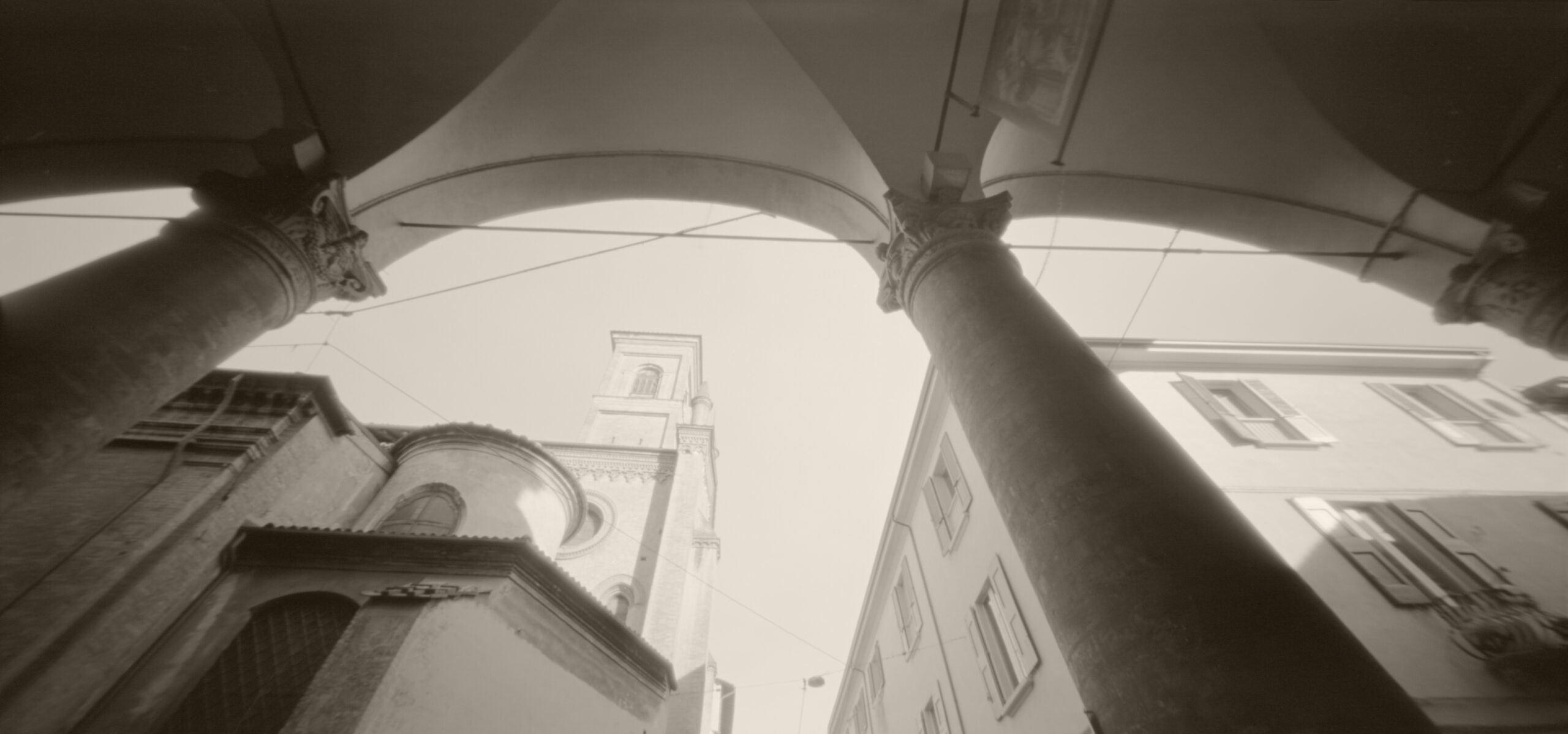
Corner of Via Marsala and Via Mentana, Study II, Bologna, Emilia-Romagna, Italy
When I think of Bologna, the first thing that comes to mind is its portici, the arcades that stretch throughout the city. From a photographic point of view, I find them rather dangerous. They keep tempting me to photograph them. At first, I fail to notice how quickly this can lead to repetitive images. But it soon became clear that the arches and columns alone are rarely enough to make a truly interesting photograph. It is only when other elements appear in the foreground or background that things begin to work. Here, it is the view of the church opposite that conveys the characteristic atmosphere beneath the portici.
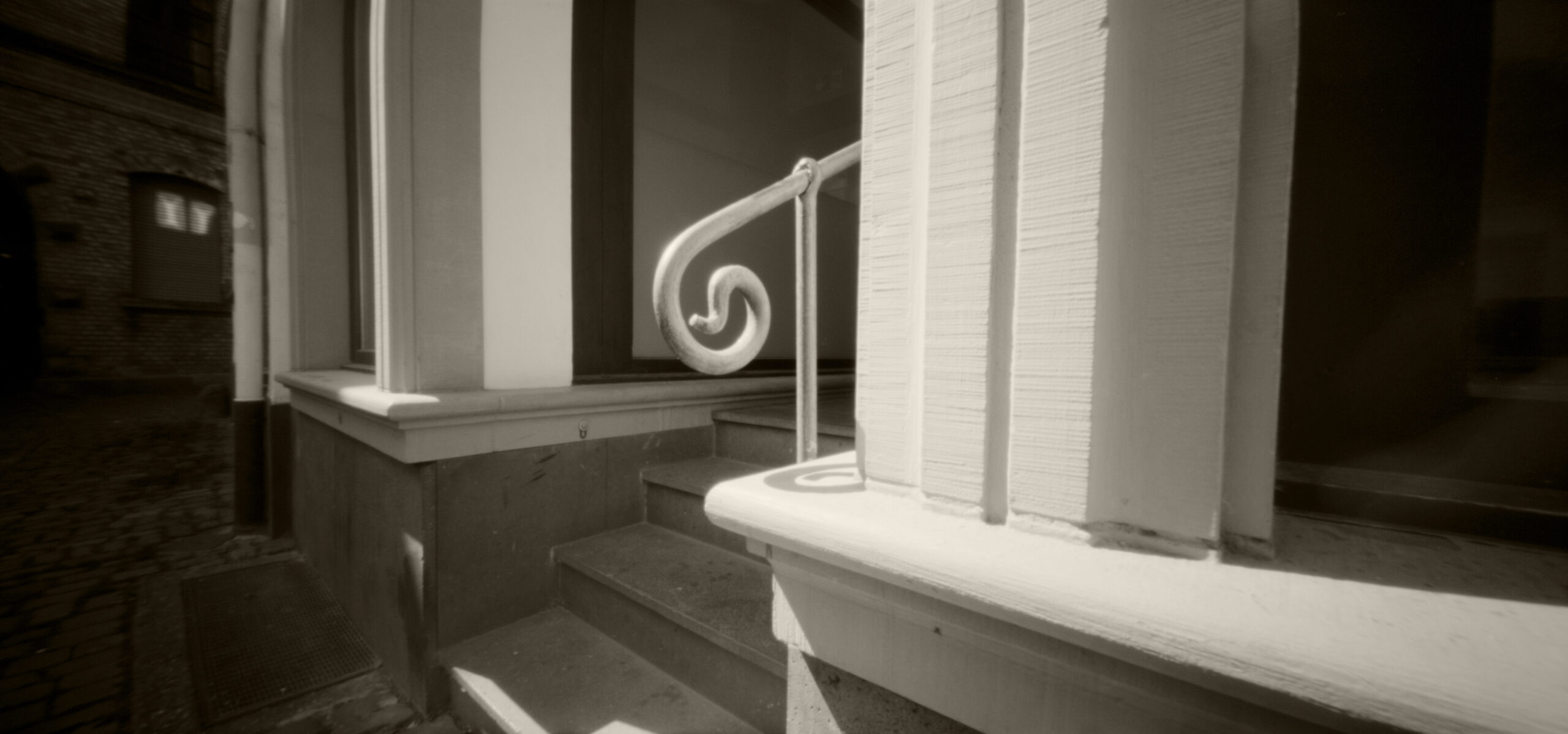
Mainz, Germany
I like to piece my world together from details. This is probably also how I see things. I rarely focus on the wider view; instead, I prefer to look at things up close. Eventually, the idea of the whole takes shape in my imagination, assembled from all these individual details. I noticed this handrail from a distance. It was immediately clear to me that there must be a few steps leading up to an entrance. I could see some of the steps, but the entrance itself remained hidden from view. Nevertheless, I had no doubts. I wanted to capture precisely this feeling. I later had to explain my idea to some curious municipal employees, who had been watching my activities with considerable puzzlement.
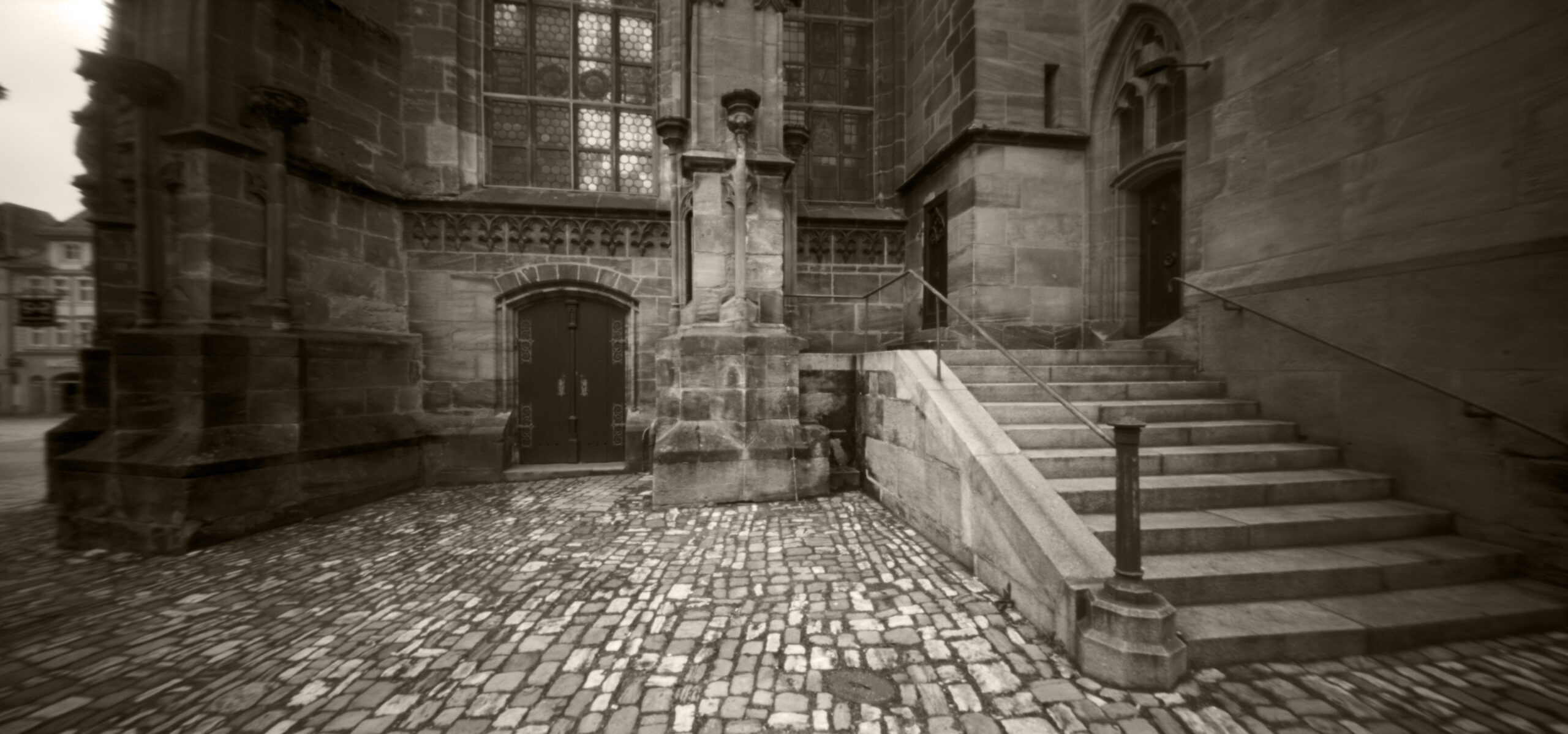
St. Gumbertus Church, Ansbach, Germany
Churches are particularly attractive subjects for me to photograph. I can hardly pass such a building without at least taking a look inside. As is often the case with architectural subjects, I am primarily interested in the interiors. St. Gumbertus in Ansbach was an exception. Its beautifully paved forecourt provides a perfect setting for the ensemble of numerous small details. I simply couldn’t resist. Usually, my choice of subject is determined above all by interesting light. Here, too, things were different. Apparently, diffuse light is quite sufficient to bring out the forms.
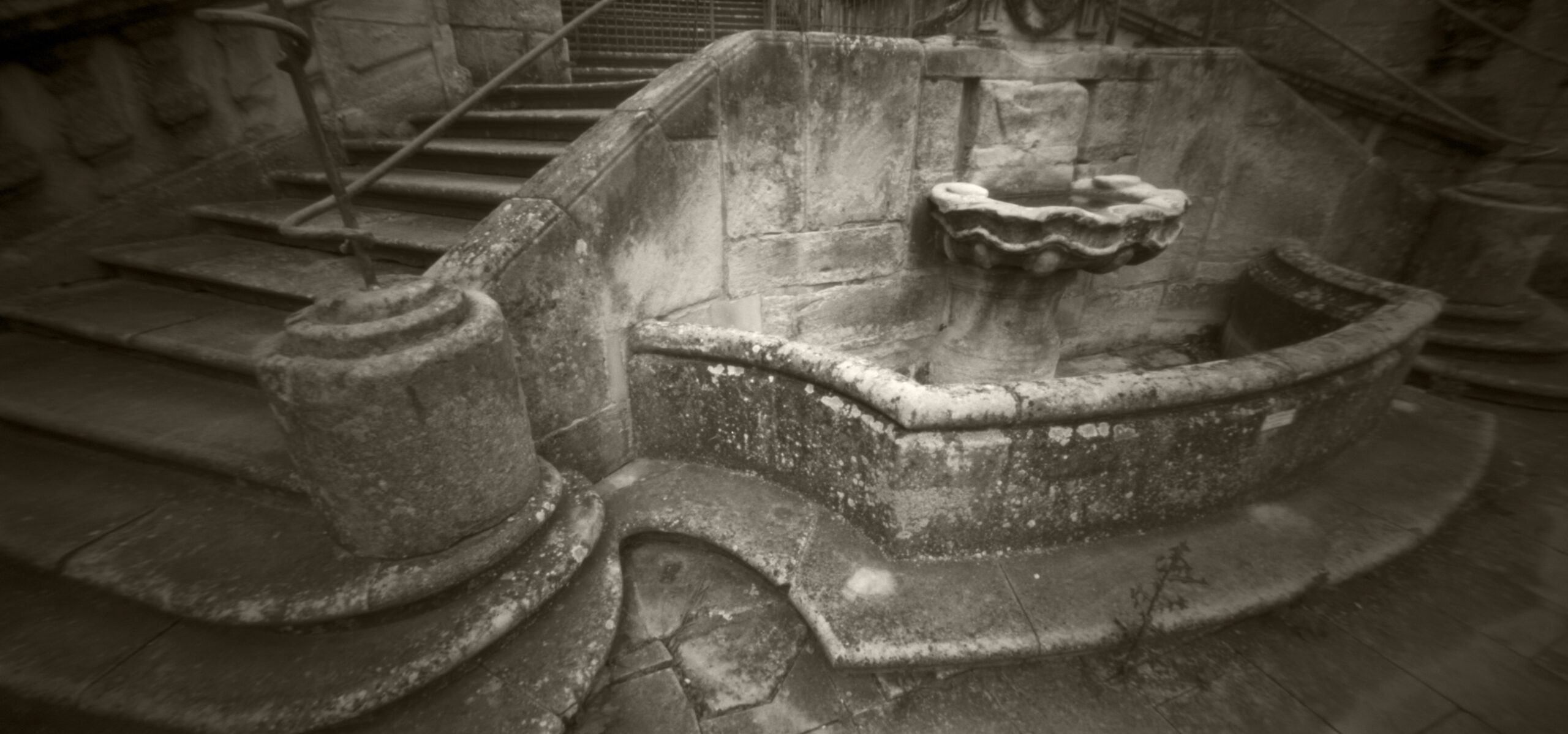
Stairway to the Monastery Garden, St. Lukas Church, Ebrach, Germany
As can already be seen in the photograph from Ansbach, what fascinates me about architectural subjects are above all the structures that architects have designed to delight the eye. In this case, they certainly succeeded in doing so. The fountain beside the stairway leading up to the monastery garden may once have served a practical purpose. I, however, am fascinated by its stone details. It is probably impossible to resist the temptation to climb the stairs in one’s imagination, just to see what the monastery garden looks like.
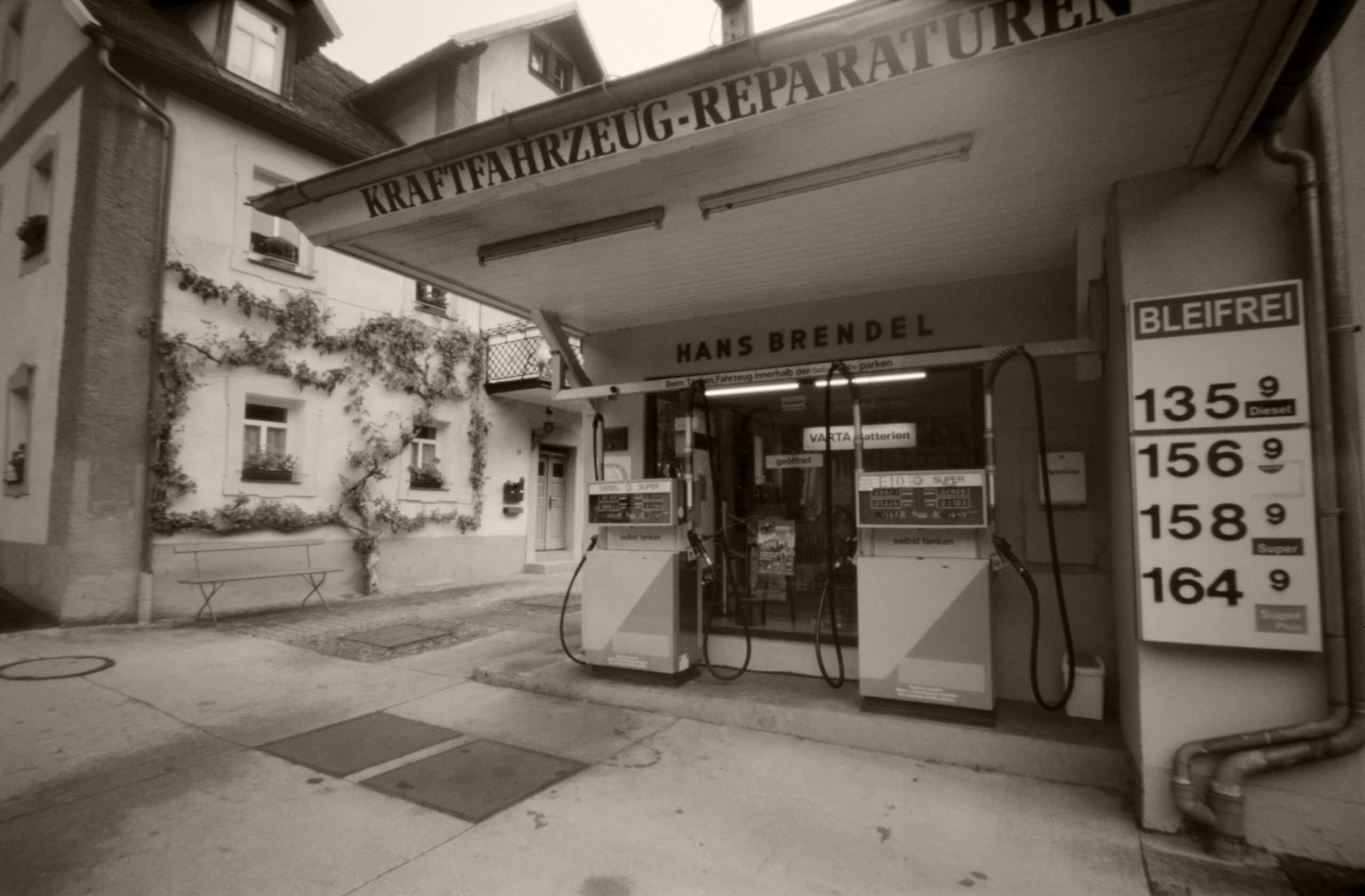
Hans Brendel’s Century-Old Gas Station, Behringersmühle near Gößweinstein, Germany
With its famous pilgrimage basilica, Gößweinstein is a very popular tourist destination. I, however, happened to pass through this little town while hiking in Franconian Switzerland. The sight of this gas station came as quite a surprise. It seems somehow out of its time, almost as if it were part of an open-air museum. But the prices displayed make it quite clear that you can still fill up your tank here. Wonderful.
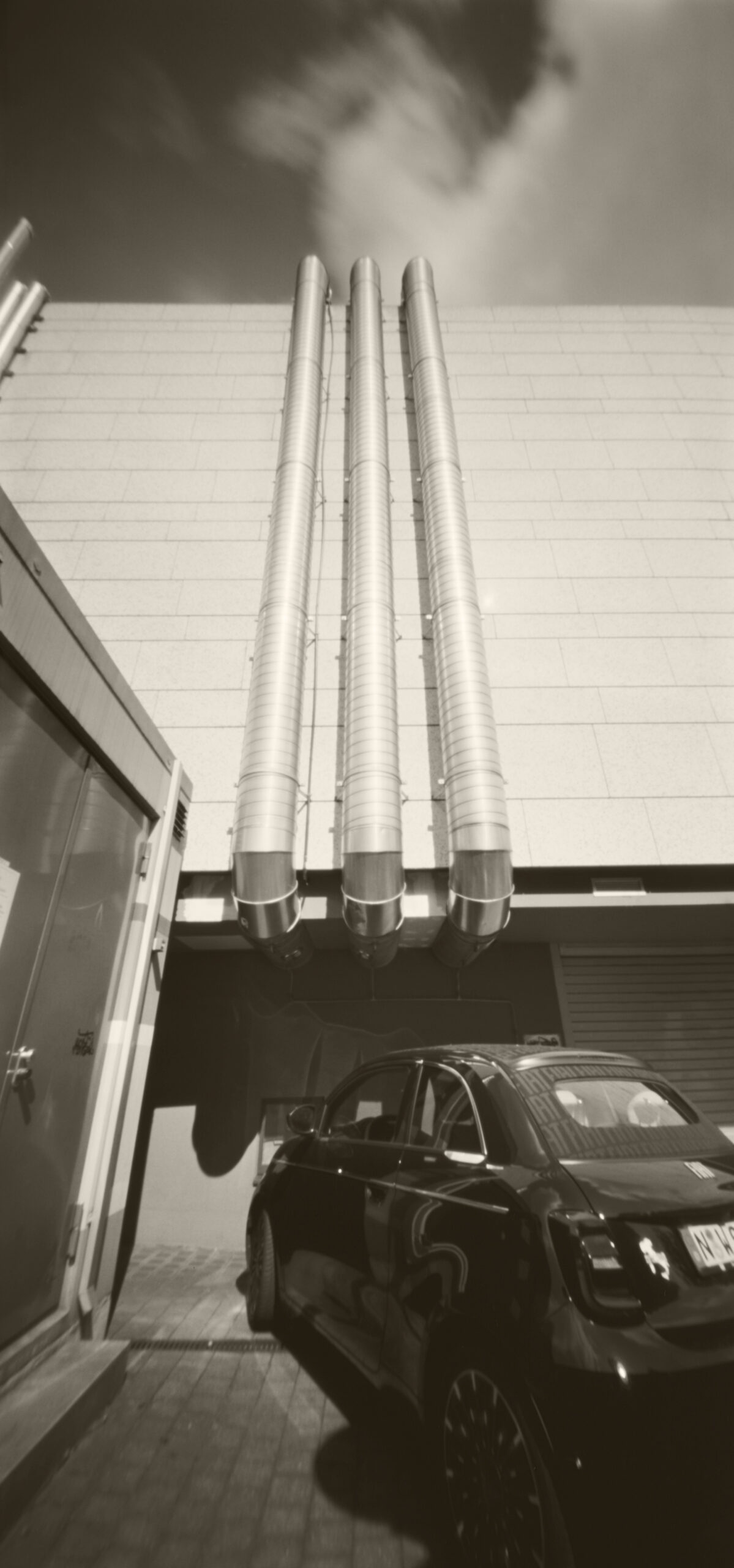
Nuremberg, Germany
Nuremberg is my neighbouring city. It is easily accessible and offers a steady stream of cultural events. My wife and I therefore visit quite often. We like to start our visits in the early morning. Since most events begin later in the day, we have time to experience the city, often in wonderful morning light. It is especially at these hours that otherwise ordinary buildings acquire a character worth looking at, which I enjoy trying to capture. After finding the façade of a car park, which glowed like a sculpture in the grazing light, I spotted a Cinquecento from a distance, parked in front of a brilliantly white wall. The exhaust pipes then provided the finishing touch. This is certainly not a conventionally beautiful photograph, but the atmosphere of a quiet early morning hits you immediately.